%2007_edited_edited_edited_pn.png)
Loft Conversions in Northern Ireland: A Guide for Homeowners.

Well-designed loft conversions in Northern Ireland not only offer additional space but also enhances your property's value. It is frequently a more cost-effective alternative to constructing an extension, as it does not encroach upon your garden by expanding your home's footprint.

In numerous projects I have undertaken, additional bedrooms have been developed. Some feature a master bedroom with an ensuite and walk-in wardrobe, while others have shared WC/shower facilities. Some have even been transformed into playrooms or home offices. If you're looking to expand your home's space, converting an unused loft is an excellent method to enhance your living areas.
Understanding the Loft Conversion Process
Before embarking on your attic conversion project, it is crucial to understand the process involved. Some conversions may require roof alterations to improve headroom and space. Therefore, having a comprehensive understanding of the project's scope and requirements, including Building Regulations, Planning, and design, is essential.
This guide covers all these aspects and more to help ensure your attic conversion is a success.

Please feel free to reach out for advice without any obligation; I would be more than happy to assist you. It would be greatly appreciated if you could first answer the three questions listed below. Following that, we can discuss your options, and I will provide a written fee proposal for my architectural services.
When you first contact me, could you please confirm the following? (see diagram below)
What is the head height in your attic?
Do you have prefabricated trusses with diagonal webs? (shown dotted below)
Could you email me a few photos of the inside of your attic?
Is your home masonry construction or entirely timber frame?

Loft Conversions in Northern Ireland:
A Comprehensive Guide for Homeowners
A loft conversion offers a superb opportunity to expand your home. However, even if you possess some construction experience, it is crucial to approach this project with meticulous planning and attention to detail.
The Importance of Compliance
Undertaking such work without obtaining Building Control Approval may impact the future sale of your property. Solicitors will review compliance during the conveyancing process on behalf of the buyer.
While loft conversions are often perceived as simple, this is a misconception. It is essential that they are designed by a professional well-versed in the planning services legislation and building control regulations.
Key Considerations for Your Loft Conversion
Building Regulations
As with any home extension, adherence to building regulations is imperative to ensure both safety and the structural integrity of your home. The following considerations need to be addressed by a professional:
New Stair
The design of the new staircase must be meticulously planned to adhere to current building regulations. Considerations will include the height of each riser, the length of the treads, the stair pitch, headroom, and the provision of handrails.
Natural Light
It is important to carefully choose between installing Velux-style skylights or constructing dormer windows. Dormers significantly improve headroom in the new space. They are an excellent solution if your loft has limited headroom, allowing for more spacious and comfortable living areas.
Insulation
Effective insulation of the roof, walls, and floors is essential to minimize heat loss and comply with energy efficiency standards. This is particularly important in a loft conversion, as heat tends to rise and can easily escape through the roof. Selecting the appropriate type of roof insulation and determining its optimal placement is crucial to retain heat in the new rooms and avoid excessive heating costs.
Fire Protection
Floors, certain walls, and doors must be structurally engineered to resist the spread of fire. In the event of a fire or other emergency, it is crucial for you, your family, and any other occupants to evacuate safely. This necessitates meticulous planning and design, including the installation of escape windows that are properly designed and strategically positioned. Automatic fire detectors/alarms should be installed in the new rooms to provide early warning of a fire, with these detectors accurately positioned and specified. If the loft conversion will create a third floor, some doors on the ground and first floors will need self-closers fitted to protect the escape route to the entrance door.
Structure
In most cases, a structural engineer will be engaged to perform and provide structural calculations. The structural integrity of the new floor must be designed and verified to ensure it can safely support the new loads without risk of collapse. Typically, the existing ceiling joists will be inadequate. Additional support to the roof may be necessary, requiring extra timber purlins or steel beams. The dimensions and spacing of the roof joists and rafters must also be assessed.
Ventilation
Proper ventilation and vapor control measures are critical when converting a loft. Poor condensation management can lead to dampness, resulting in costly repairs, particularly in concealed areas such as behind plasterboard ceilings. Additional ventilation is necessary to prevent unhealthy living conditions.
Types of Roof Spaces: Which Do You Have?
Type 1: Cut Roof
The first kind is known as a "Cut Roof," where a builder constructs the roof on-site using separate timber ceiling joists, rafters, purlins, and occasionally steel beams. Being an open space, this is the simplest attic to convert.

Type 2: Prefabricated Truss Roof
The second type is known as a "Prefabricated Truss Roof," with each roof truss designed and manufactured in a factory, then delivered to the site where the builder assembles and secures each truss member in place. Converting this type of loft or attic space is more challenging, but with help from me and a structural engineer, it can be achieved.
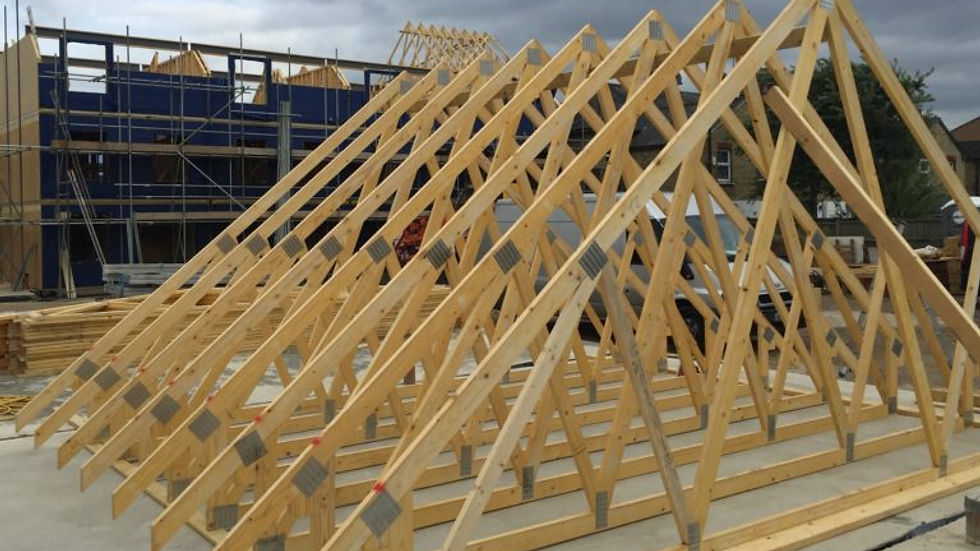
Certainly, a trussed roof can be converted; however, it demands careful planning and precise execution. Trussed roofs are engineered to distribute weight evenly across the entire structure, making them suitable for supporting substantial loads such as snow and wind. If the diagonal members of each truss are to be removed to create a larger, more open space, this additional load-bearing capacity must be addressed.
How Can I Assist You with Your Project?
I provide clear, practical guidance on the best approach for designing your loft conversion in Northern Ireland. My role is to help you understand what’s possible, create a design that works for your home, and guide you through each stage with confidence.
Beyond design, I also manage the statutory approvals required for any construction project. This includes Planning and Building Control — two essential steps to ensure your project meets local regulations and safety standards.
I will prepare all drawings and documentation, submit applications on your behalf, and communicate directly with the relevant authorities to keep the process moving smoothly. My familiarity with these procedures can save you time and reduce the stress often associated with approvals.
What You Can Expect
No‑obligation introductory call to discuss your project
Written Fee Proposal outlining all stages and costs
Measured survey of your home
Preparation of design proposals for your approval
Planning Application (if necessary)
Building Control Application
Why Choose GT Building Design
With over 40 years’ experience in residential design, I help homeowners plan extensions, conversions and internal alterations with clear drawings, practical guidance and a smooth, well‑managed process from first ideas through to approval.
I work with homeowners across North Down, Greater Belfast and the surrounding towns, supporting a wide range of projects — from small internal changes to full house extensions and larger home improvements.
You can explore my services below:
If you’re planning a home extension or thinking about improving your layout, you’re welcome to get in touch and talk through your ideas. A calm, practical chat at the start can often make the whole process much easier.


Comments